
Urban India is growing at an unprecedented pace. With rapid urbanization, rising populations, and changing consumption patterns, waste management in Indian cities has become one of the biggest civic challenges of our time. Overflowing bins, irregular waste collection, unpleasant odors, and health hazards are common sights in many urban areas. Traditional waste collection methods are no longer sufficient to handle the sheer volume of garbage generated every day.
This is where smart garbage compactors are stepping in as a game-changing solution. Powered by technology, data, and intelligent design, these compactors are redefining how Indian cities collect, manage, and dispose of waste. Companies like Rudraa Enterprises are playing a key role in bringing innovative, efficient, and sustainable waste management solutions to urban India.
In this in-depth article, we’ll explore how smart garbage compactors are transforming urban waste management in India, why they are crucial for the future of clean cities, and how they align with national initiatives like Swachh Bharat Abhiyan and Smart Cities Mission.
The Growing Waste Management Crisis in Urban India
India generates more than 62 million tonnes of municipal solid waste every year, and this number continues to rise. Major cities like Delhi, Mumbai, Bengaluru, and Chennai struggle daily with waste collection and disposal. Landfills are overflowing, and waste often ends up in open spaces, drains, and water bodies.
Some key challenges include:
- Limited landfill space
- High operational costs of waste collection
- Inefficient manual monitoring of garbage bins
- Health risks for sanitation workers
- Environmental pollution due to improper disposal
Without smart intervention, the waste problem can quickly spiral out of control. This is why cities are now looking beyond traditional bins and trucks toward technology-driven waste management systems.
What Are Smart Garbage Compactors?
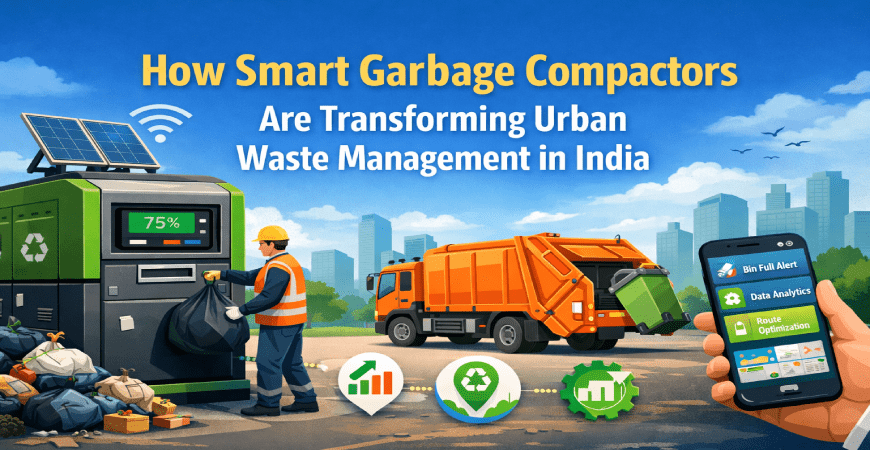
Smart garbage compactors are advanced waste bins equipped with compacting mechanisms and intelligent sensors. Unlike conventional bins, these compactors compress waste, allowing them to hold up to 5–8 times more garbage in the same physical space.
Key features typically include:
- Automatic waste compaction
- Fill-level sensors
- IoT-based monitoring
- Solar-powered operation
- Real-time alerts to waste management teams
By reducing the frequency of waste collection and optimizing routes, smart waste compactors significantly improve efficiency while lowering costs.
How Smart Garbage Compactors Work
The working of a smart garbage compactor is simple yet powerful. When waste is deposited, sensors detect the fill level. Once the garbage reaches a certain threshold, an internal compaction mechanism compresses it, creating more space inside the bin.
At the same time, IoT-enabled systems transmit real-time data to a centralized dashboard. Municipal authorities or private operators can track:
- Current fill status
- Location of bins
- Collection schedules
- Maintenance alerts
This ensures that garbage is collected only when required, eliminating unnecessary trips and reducing fuel consumption.
Role of IoT and Data in Smart Waste Management
One of the biggest advantages of smart garbage compactors is their ability to generate actionable data. Through Internet of Things (IoT) technology, every bin becomes a data point.
Benefits of data-driven waste management include:
- Optimized collection routes
- Reduced manpower requirements
- Lower operational expenses
- Better planning for waste disposal
- Improved accountability and transparency
For cities aiming to become truly “smart,” data-backed decision-making is no longer optional—it’s essential.
Environmental Benefits of Smart Garbage Compactors
Smart garbage compactors contribute significantly to environmental sustainability. By compacting waste and reducing collection frequency, they help lower carbon emissions caused by garbage trucks.
Key environmental benefits include:
- Reduced fuel consumption
- Lower greenhouse gas emissions
- Cleaner public spaces
- Prevention of waste overflow
- Reduced littering and pest problems
In addition, many compactors offered by Rudraa Enterprises are solar-powered, making them energy-efficient and eco-friendly.
Improving Public Health and Hygiene
Overflowing garbage bins are breeding grounds for bacteria, insects, and rodents. They also emit foul odors that affect the quality of life in surrounding areas.
Smart garbage compactors address these issues by:
- Keeping waste sealed and compacted
- Preventing overflow even during peak usage
- Reducing human contact with garbage
- Minimizing the spread of diseases
Cleaner surroundings directly translate to better public health, especially in densely populated urban areas.
Smart Garbage Compactors and Swachh Bharat Abhiyan
India’s Swachh Bharat Abhiyan aims to create a clean, hygienic, and waste-free nation. Smart garbage compactors align perfectly with this vision.
They support the mission by:
- Encouraging scientific waste management
- Improving urban cleanliness rankings
- Enhancing citizen participation
- Promoting sustainable sanitation infrastructure
Many municipalities are now integrating smart compactors into their Swachh Bharat action plans to achieve long-term results rather than temporary cleanliness drives.
Cost Efficiency and Long-Term Savings
While the initial investment in smart garbage compactors may be higher than traditional bins, the long-term cost savings are substantial.
Cost benefits include:
- Fewer garbage collection trips
- Reduced fuel and vehicle maintenance costs
- Lower labor expenses
- Less wear and tear on collection equipment
- Extended landfill lifespan
Over time, cities and private organizations realize a strong return on investment (ROI), making smart compactors a financially sound decision.
Applications of Smart Garbage Compactors in Indian Cities
Smart garbage compactors are versatile and can be installed across various urban settings, such as:
- Residential societies
- Commercial complexes
- Shopping malls
- Airports and railway stations
- Public parks and tourist spots
- Hospitals and educational institutions
Their sleek design and odor-control features make them suitable even for high-footfall public spaces.
Role of Rudraa Enterprises in Smart Waste Solutions
Rudraa Enterprises has emerged as a trusted name in providing smart waste management solutions in India. With a focus on quality, innovation, and sustainability, the company offers advanced smart garbage compactors designed for Indian conditions.
Why choose Rudraa Enterprises?
- Robust and durable designs
- Advanced IoT integration
- Solar-powered options
- Custom solutions for different environments
- Strong after-sales support
By partnering with municipalities, businesses, and institutions, Rudraa Enterprises is helping cities move toward a cleaner, smarter future.
Supporting India’s Smart Cities Mission
India’s Smart Cities Mission focuses on improving urban infrastructure through technology and sustainable practices. Smart garbage compactors are a natural fit within this ecosystem.
They help cities achieve:
- Efficient resource utilization
- Improved civic services
- Technology-enabled governance
- Enhanced urban aesthetics
Waste management is a core pillar of smart city development, and intelligent compaction systems play a crucial role in achieving these goals.
Citizen Engagement and Behavioral Change
Technology alone cannot solve waste problems. Citizen participation is equally important. Smart garbage compactors encourage responsible behavior by offering:
- Clean and user-friendly waste disposal
- Visual indicators showing bin status
- Reduced mess around disposal areas
When people see cleaner surroundings, they are more likely to maintain them. This creates a positive cycle of cleanliness and awareness.
Challenges and the Road Ahead
While smart garbage compactors offer immense benefits, challenges such as initial costs, maintenance requirements, and the need for skilled operators still exist.
However, as technology becomes more affordable and awareness increases, adoption is expected to grow rapidly. Government incentives, public-private partnerships, and innovative companies like Rudraa Enterprises are accelerating this transition.
The future of urban waste management in India lies in automation, data, and sustainability.
Conclusion: A Smarter Way to Manage Urban Waste
Urban India is at a critical juncture when it comes to waste management. Traditional systems are struggling to keep up, but smart garbage compactors offer a practical, efficient, and sustainable solution. By reducing waste volume, optimizing collection, improving hygiene, and lowering environmental impact, these systems are truly transforming how cities manage garbage.
With strong alignment to national initiatives like Swachh Bharat Abhiyan and the Smart Cities Mission, and with innovative players like Rudraa Enterprises leading the way, smart garbage compactors are not just a trend—they are the future of urban waste management in India. Embracing this technology today means building cleaner, healthier, and smarter cities for tomorrow.